From DevSecOps to Agentic SecOps: Can AI Defend AI-Native Software?
Software is increasingly written, tested and operated with AI agents, and attackers are using agents too. Can security operations keep up by…
The EthicalHat research team: penetration testers, SOC analysts and engineers writing about security, software engineering and AI.

Software is increasingly written, tested and operated with AI agents, and attackers are using agents too. Can security operations keep up by…

When agents write code, open pull requests, change infrastructure and call tools, written policies and prompts are not enough. Rules have to…

Preventive controls for AI agents will never be perfect, because prompt injection has no complete fix. Runtime security fills the gap: captu…

As AI features and agents move into core products, organisations need a platform for them, just as they needed one for microservices. We out…

When agents write a large share of code, the question 'how do we know it's right?' moves to the centre of the software development lifecycle…

AI systems can now find real, exploitable bugs in mature code, and they are being pointed at everything. That is good news for software qual…

In an agentic SDLC, AI agents take on work at every stage: specifying, coding, testing, reviewing, releasing and operating. This article des…

AI engineering has become its own discipline, distinct from both machine learning research and traditional software engineering. This mid-20…

Coding agents run commands, read files and make network calls on developer machines and CI runners. Preventive controls reduce the risk, but…

AI agents act on behalf of people, teams and other agents, which makes them non-human identities with an unusual twist: delegated, dynamic a…

In many teams, a typical day now involves dispatching tasks to coding agents, reviewing their pull requests and tuning the pipeline that che…

Coding agents run shell commands, read files, use Git and sometimes reach cloud consoles, often on developers' own machines with their crede…

Service accounts, API keys, OAuth apps, workload identities and now AI agents vastly outnumber employees in most organisations, and they are…

MCP has become the standard way AI applications reach enterprise systems, and that makes the MCP layer a security boundary in its own right,…

A tester's view of agentic systems. We break the agent attack surface into four areas (identity, tools, memory and autonomy), describe the a…

In many engineering organisations, agents now open a steady share of pull requests. That raises management questions nobody had to answer be…

Organisations running many AI agents need more than per-agent controls. They need a security architecture: shared identity for agents, a gov…

A year ago, most AI agents were pilots. Now they run inside ticketing systems, CI pipelines, SOCs and customer service, often with more acce…

Moving from AI that answers to AI that acts changes the architecture. Actions need identity, authorisation, state, reliability and accountab…

Coding agents can now complete many well-defined tasks end to end. The harder question for 2026 is whether they can maintain software over t…

Agents now take part in every stage of the delivery pipeline: writing features, fixing findings, triaging failures and preparing releases. T…

Red teaming used to be something a security team did to a finished system. For AI agents, it has to start with the developers who build them…

Coding agents now run inside CI pipelines: triaging failed builds, fixing flaky tests, reviewing pull requests and responding to issues. The…

For two years, 'AI-powered attacks' mostly meant better phishing emails. This summer, public reports showed criminals using agentic AI tools…

This summer delivered a series of warnings for AI-powered development: an agent deleting a production database, a malicious prompt shipped i…

Increasingly, the users of your application are not only people but AI agents acting for them. Designing for that from day one changes APIs,…

MCP servers are now part of how software gets built: developers connect coding agents to repositories, ticketing, CI, cloud consoles and dat…

With background coding agents now available from GitHub, OpenAI, Google and Anthropic, some teams have agents opening a meaningful share of…

Agent SDKs, standard tool protocols and better models have made AI agents a production reality in 2025. This article sets out a reference ar…

A practical hardening guide for security teams responsible for MCP deployments: how to assess MCP servers, configure clients, apply the prot…

The Model Context Protocol has become the standard way to connect AI assistants to tools and data in barely six months. Security researchers…

AI applications are built from models, datasets, notebooks, training pipelines, ML frameworks and serving infrastructure, each with its own…

With new agent SDKs from the major model providers, MCP support spreading and Google's Agent2Agent protocol just announced, building agents…

In the space of two months, every major AI coding tool shipped an 'agent mode'. Instead of suggesting the next line, agents plan changes, ed…

'Agent' is on every AI coding product this spring. Under the label, the technical differences from a copilot are specific: how context is ga…
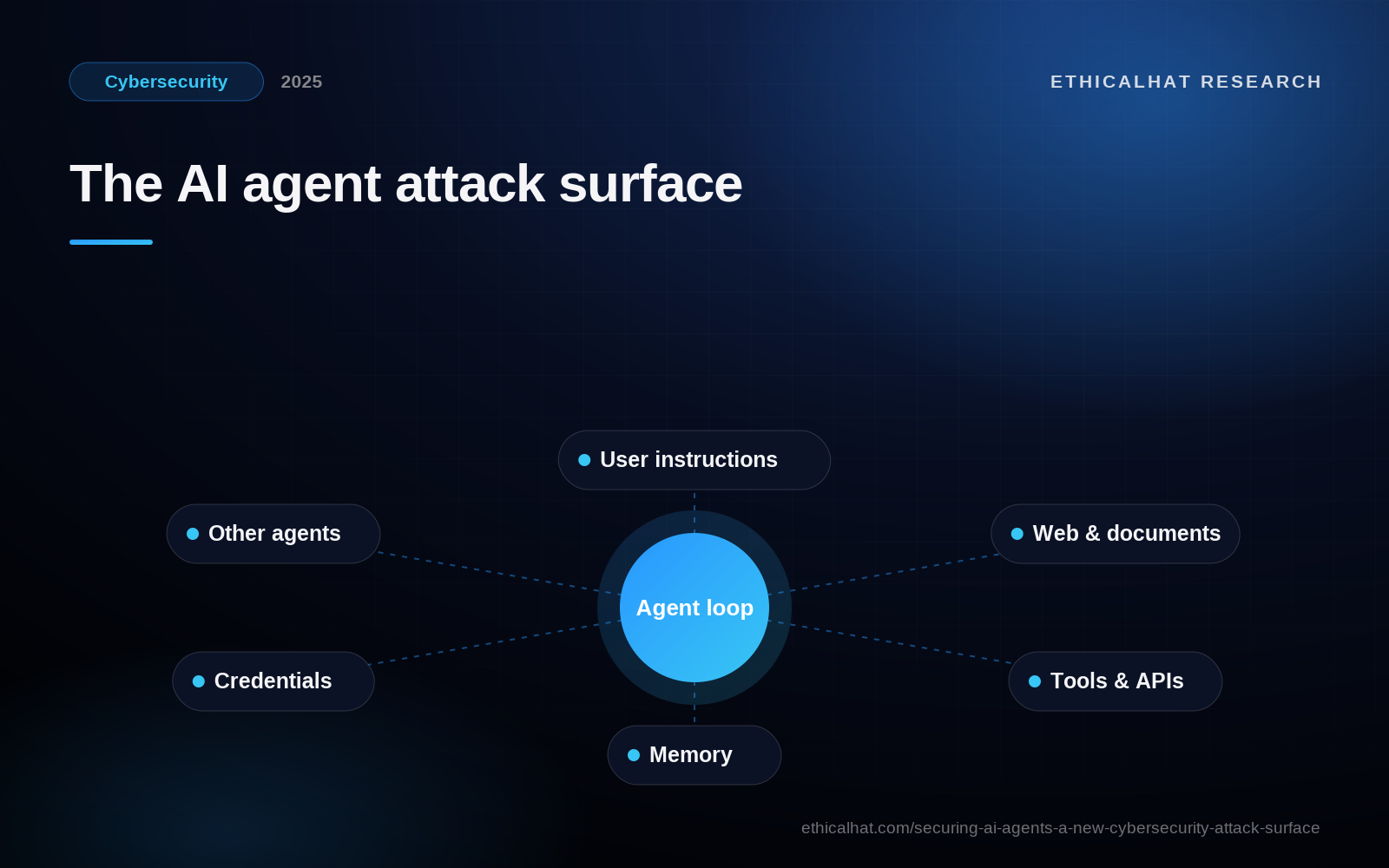
AI agents that browse, write code and operate software on a user's behalf moved from demos to products in the last few months. They combine…
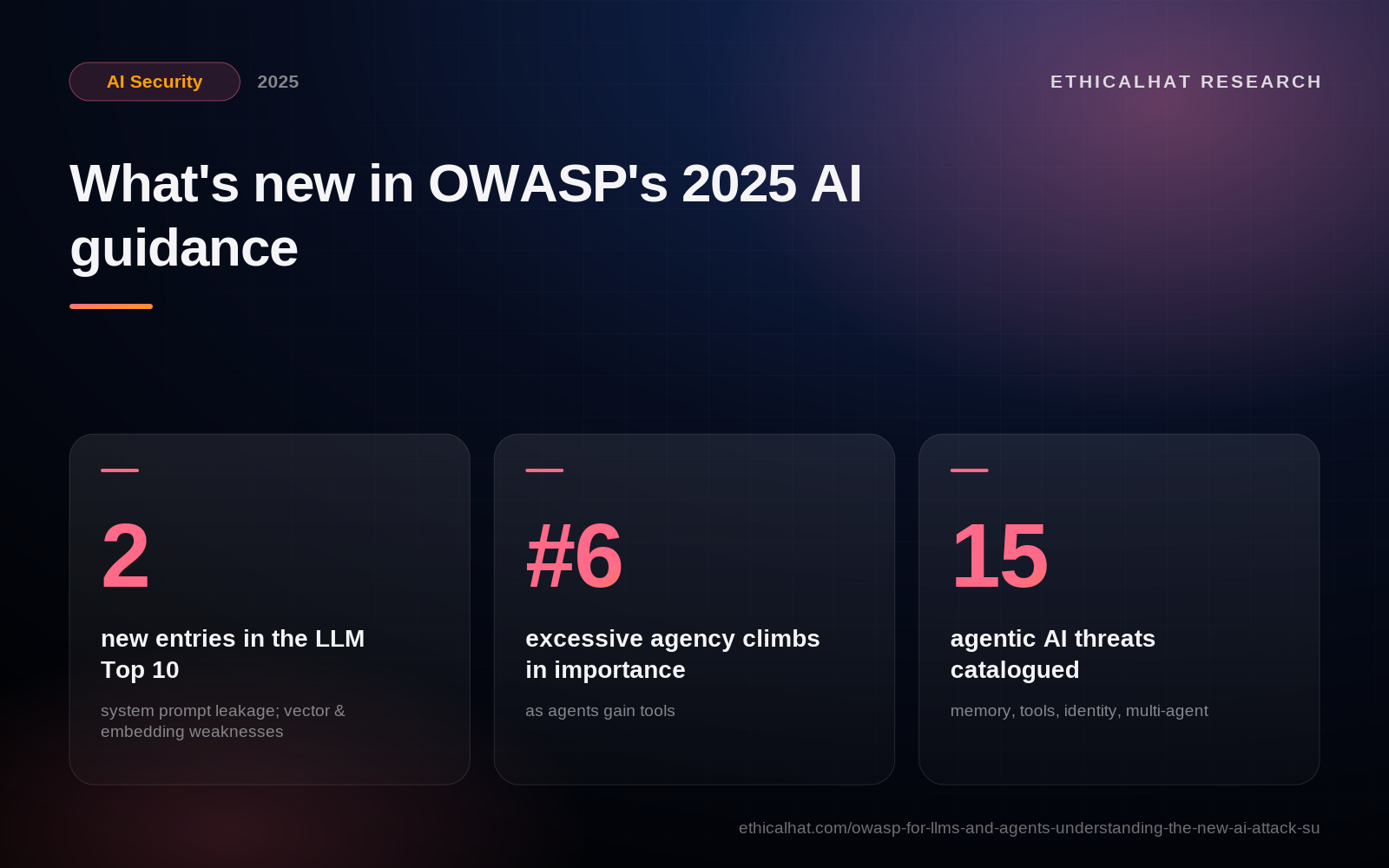
OWASP's GenAI Security Project has published a refreshed 2025 Top 10 for LLM Applications and, last month, a dedicated threat taxonomy for a…

OpenAI's o1 and o3-mini, DeepSeek-R1 and now Claude 3.7 Sonnet's extended thinking all spend extra computation reasoning before they answer.…

The Model Context Protocol gives AI assistants a standard way to use your tools and data. Three months after its release, clients and server…

When an AI assistant writes a vulnerability and a developer merges it, who is responsible: the developer, the reviewer, the organisation or…
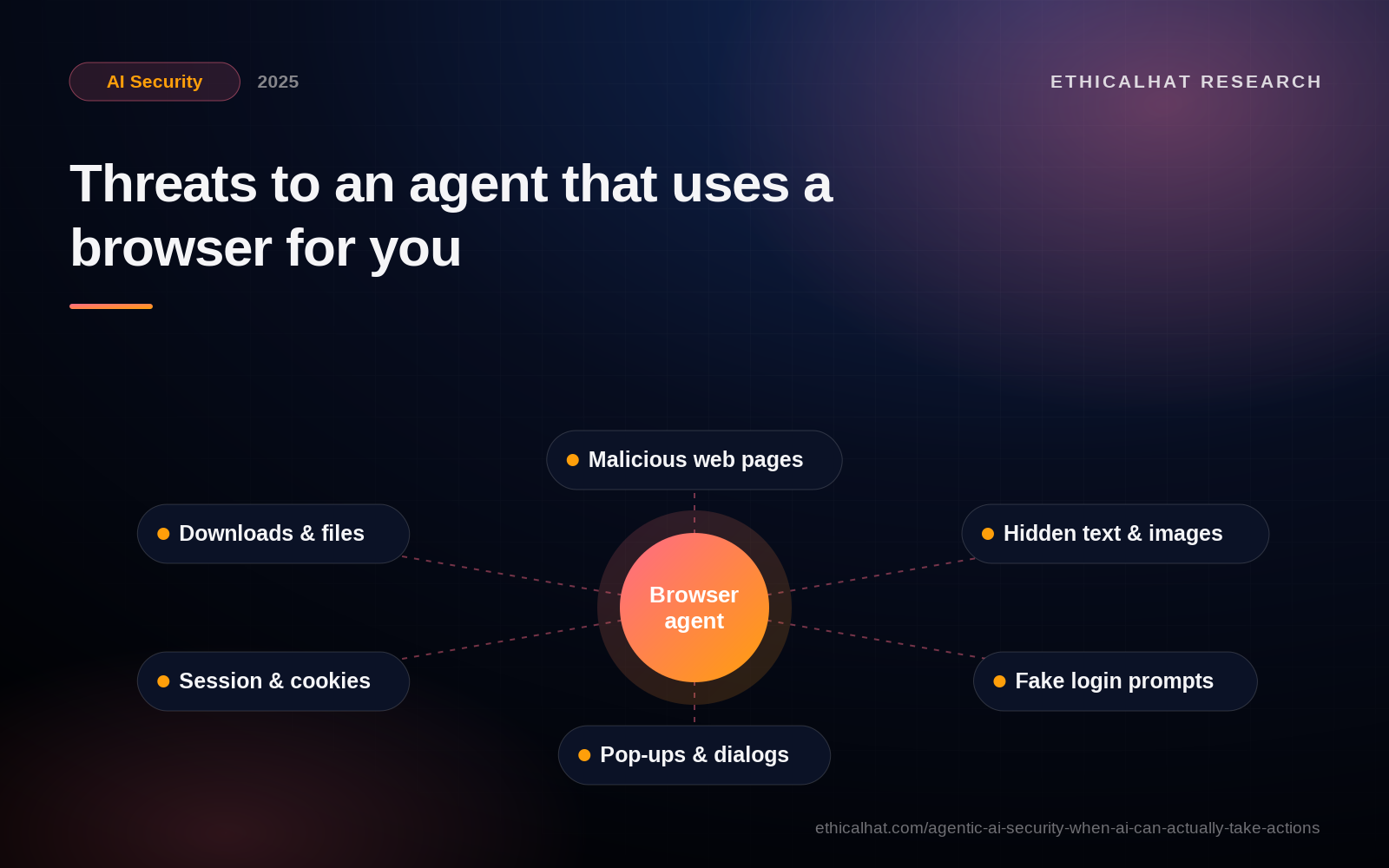
Computer-use and browser agents can now click, type and navigate like a person, in real browsers and desktops, on your behalf. That turns ev…

Every AI application has been building its own integrations with tools and data. The Model Context Protocol, released as an open standard in…

In November, Google reported an AI agent finding an exploitable bug in SQLite before release, and AI-generated fuzz targets uncovering vulne…

Google has said more than a quarter of its new code is now AI-generated, then reviewed and accepted by engineers. As AI writes more code eve…

LLMs are finding their way into every stage of the DevOps loop: explaining failed builds, drafting infrastructure code, summarising incident…

Most organisations now depend on a mix of AI model APIs, open-weight models, ML packages, datasets and hosted AI platforms. This year's inci…

Agent demos are easy; agents that work reliably in production are not. After a year of building them, the patterns are clearer: constrain th…

Most organisations now have LLM features in production, and many have never tested them adversarially. This is a practical methodology for r…

Most discussion of AI in software development focuses on writing code, which is only one part of the software development lifecycle. We walk…

Kubernetes turned ten this month. For large organisations its most important role is no longer running containers, but serving as the API on…

AI is arriving in application security tooling: automatic fix suggestions for scanner findings, LLM-assisted code review, AI-generated secur…

NIST has published a draft profile of its Secure Software Development Framework for generative AI, and the EU AI Act received final approval…

Two weeks ago, GPT-4o showed a single model that sees, hears and speaks in real time. Gemini 1.5 reads hours of video, and Claude 3 reads ch…

Two years after Apple, Google and Microsoft committed to passkeys, they are now supported by the major platforms, browsers and many of the l…

Retrieval-augmented generation is how most organisations connect LLMs to their own data, and it introduces risks that are easy to miss: assi…

The xz Utils backdoor came within weeks of shipping in major Linux distributions after a two-year social engineering campaign against an ope…

Code completion was the first act. In 2024, AI tools are taking on larger units of software engineering work: understanding whole codebases,…

AI coding tools have moved beyond autocomplete to chat, codebase-aware answers and, as of last week's Devin announcement, claims of autonomo…

Last week, researchers reported around a hundred malicious models on Hugging Face that could execute code on anyone who loaded them. AI appl…

It is the most common question we hear from teams building with LLMs: should we use retrieval-augmented generation or fine-tune a model? The…

Adding a large language model to an application changes its threat model in ways traditional AppSec does not cover. Input becomes instructio…

An AI application is not just a model. It is a stack: users and identity, an application and gateway, prompts and context, retrieval, tools,…

Adding scanners to one pipeline is easy. Running application security across hundreds of repositories and dozens of teams is not: findings p…

AI red teaming started as something frontier model labs did before releases. With October's US Executive Order on AI and a year of LLM featu…

AI assistants make developers faster, and they also introduce problems that do not show up immediately: insecure patterns delivered with con…

CISA's secure-by-design guidance, expanded last month with more international partners, asks software makers to treat security as a core bus…

Retrieval-augmented generation has become the default way to connect LLMs to enterprise knowledge, and the most common way for AI features t…

This year's biggest breaches did not start with malware. They started with a phone call to a help desk, a forged token and a stolen session…

Thousands of hackers spent DEF CON trying to break AI models, the White House has secured commitments from AI companies to red-team their sy…

Backstage, the developer portal framework Spotify open-sourced in 2020, has become the default starting point for internal developer portals…

Developer surveys this summer show AI tools have gone mainstream: most developers use them or plan to. But usage looks different from the ma…

OWASP published its first Top 10 for Large Language Model Applications on 1 August. Meanwhile, researchers have shown automated jailbreaks t…

Last month we looked at the new OWASP API Security Top 10 from a security team's point of view. This guide is for the developers who write t…

LLM applications are moving into production faster than security practices are forming around them. This article sets out engineering princi…

APIs now carry most application traffic, and they expose business logic directly to anyone who can read the documentation or a mobile app's…

Large language models do not know your policies, products or documents, and fine-tuning is a poor way to teach them facts. Retrieval-augment…

In twelve months, AI assistants have gone from a novelty to a daily tool for a large share of developers. Copilot is generally available, Ch…

CISA and its international partners want software makers, not their customers, to carry the burden of security. Their new Secure by Design g…

AutoGPT became one of the fastest-growing projects on GitHub within weeks of its release, promising AI that pursues goals on its own. Behind…

GPT-4 and the ChatGPT API have made it easy to build an impressive LLM prototype in a day. Getting it to production is another matter. This…

GPT-4 arrived last week with markedly better reasoning, a much longer context window and the ability to understand images as well as text. W…

Deciding you need a platform is the easy part. This practical guide covers how to build an internal developer platform: the reference archit…

Within days of launch, users persuaded Bing Chat to reveal its hidden instructions, and researchers showed that web pages can silently take…

Over the holidays, a dependency-confusion attack hit PyTorch's nightly builds, and in January CircleCI told every customer to rotate their s…

Within days of ChatGPT's release, security researchers were using it to explain code, draft detection rules and summarise threat reports, an…

Linux 6.1, released this week, is the first kernel with initial support for Rust. Google says Rust is now a significant share of new native…

ChatGPT reached a million users in about five days. Its underlying technology is not radically new, so why has it captured public attention…

A week after ChatGPT's launch, developers are using it to explain code, write functions, draft tests and debug errors. Getting good results…

Infrastructure as code lets teams create cloud environments from reviewed, versioned files, which means cloud misconfigurations can be caugh…

Developers are building products on GPT-3, Codex and Stable Diffusion at a remarkable pace. These applications introduce security problems t…

Large language models can now write fluent, personalised emails in seconds, and researchers have shown AI-written spear-phishing can outperf…

'You build it, you run it' made teams faster, until every team had to be expert in Kubernetes, Terraform, CI, observability and security. Pl…

Kubernetes 1.25 has just removed PodSecurityPolicy, and many clusters are running without a replacement. We walk through the layers of cloud…

In six months, DALL·E 2, Midjourney and Stable Diffusion have turned text-to-image generation from a research curiosity into something anyon…

Machine learning systems sit between data science, engineering, security and risk teams, and their security often belongs to none of them. W…

GitHub Copilot became generally available in June, and code-generating models are now part of everyday development. That has consequences fo…

Containers make applications portable, and they also package operating systems, dependencies and configuration into every image. This develo…

GitHub Copilot became generally available three weeks ago and Amazon has announced CodeWhisperer. AI pair programming has moved from preview…

With instruction-tuned models like InstructGPT now the default in OpenAI's API, and research showing that 'let's think step by step' can tra…

Teams deploy dozens of times a day, and a security review at the end of the release cycle cannot keep up. DevSecOps puts automated security…

AI code assistants are spreading through development teams during Copilot's extended preview, often before security or legal teams have been…

WebAssembly started as a way to run near-native code in the browser, and now powers apps like Figma and the web version of Photoshop. With W…

Last month we covered SBOM standards and policy. This article is for developers and build engineers: how to generate accurate SBOMs from rea…

DeepMind's AlphaCode, announced this month, reached roughly median human performance in competitive programming. Six months after Copilot's…

Log4Shell showed that most organisations cannot say what is inside the software they run. A software bill of materials is the fix the US gov…

Eleven days after CVE-2021-44228 went public, most organisations are still answering a simple question: where do we run Log4j? Here is what…

Writing tests is the part of software engineering that developers most often skip. Search-based tools, reinforcement learning and now large…

2021 has been the year of software supply-chain attacks, from Codecov to hijacked npm packages last month. Machine learning teams face those…

Prompting a large model gets you surprisingly far, but many production tasks still need fine-tuning. As models grow into the billions of par…

Dashboards and log searches work well when you know which questions to ask. In distributed systems, the hardest incidents are the ones nobod…

Criminals have used AI-cloned voices to impersonate executives and authorise large transfers, and the FBI has warned that synthetic media wi…

The OWASP Top 10 was updated last month for the first time since 2017, and broken access control is now the number one risk. This practical…

OpenAI's Codex paper reports that its model solves a meaningful share of hand-written programming problems from their descriptions, and far…

Stanford researchers have given a name to the models reshaping AI: foundation models, trained once on broad data and adapted to countless ta…

You do not need to become a cluster administrator to ship software on Kubernetes, but you do need to understand a handful of concepts that d…

MITRE's new ATLAS knowledge base catalogues real attacks on machine learning systems, and Microsoft has open-sourced Counterfit for testing…

Colonial Pipeline, JBS and Kaseya were not the work of lone hackers. They were run through a franchise model in which developers, affiliates…

Last week GitHub launched a technical preview of Copilot, an 'AI pair programmer' that suggests whole functions inside the editor. It is the…

SolarWinds showed how a patient attacker using legitimate credentials and tools can slip past rule-based detection for months. Behavioural a…

A single leaked VPN password without MFA was enough to shut down the largest fuel pipeline in the US. With the new Executive Order telling f…

The Codecov breach disclosed last month showed how a single tampered script could quietly collect the credentials stored in thousands of cus…

Natural language processing used to be a pipeline of hand-built steps and task-specific models. In three years, pre-trained transformers suc…

MLOps brought CI/CD discipline to machine learning: versioned data, automated training pipelines and model registries. Security has mostly b…

As security products rely more on machine learning, attackers are learning to target the models themselves. Tiny, carefully chosen changes c…

GitOps makes a Git repository the single source of truth for what should be running, with an agent in the cluster continuously pulling and r…

Two weeks ago, a researcher showed he could run code inside Apple, Microsoft, PayPal and dozens of other companies simply by publishing pack…

The SolarWinds compromise disclosed this month shows that attackers can turn a vendor's own build process into a distribution channel for ma…

Machine learning projects are built on a deep stack of open-source frameworks, Python packages, pre-trained models and public datasets, ofte…

BERT, GPT-3, T5 and now vision models all rest on the same 2017 architecture: the transformer. This explainer walks through how transformers…

Testing and bug-finding consume a large share of engineering time, and machine learning is starting to help: predicting which tests to run,…

AI promises to help overwhelmed security teams, but it brings problems of its own: alert floods, models that learn the wrong lessons from bi…

Cloud providers secure the infrastructure, but most cloud breaches come from how customers configure it. We look at why misconfiguration, ov…

Once a system has dozens of microservices, every team ends up re-implementing retries, timeouts, encryption and metrics. A service mesh move…

Application security teams are increasingly asked to review systems with machine learning at their core. Some of their existing knowledge tr…

The pandemic sent the workforce home and pushed applications to the cloud, and the network perimeter quietly stopped meaning anything. With…

Traditional machine learning needs thousands of labelled examples per task. GPT-3 has made 'few-shot' learning, where a model picks up a tas…

Autocomplete has been part of IDEs for decades. In the last two years, machine learning has pushed it from completing identifiers to suggest…

Signature-based antivirus has been declared dead many times, and ML-based 'next-generation' endpoint protection has been sold as its replace…

OpenAI's GPT-3 is more than a hundred times larger than GPT-2, and it can perform tasks it was never explicitly trained for, just from a des…

'Shift left' means finding and fixing security issues earlier in development, where they are cheaper and faster to fix. That only works if d…
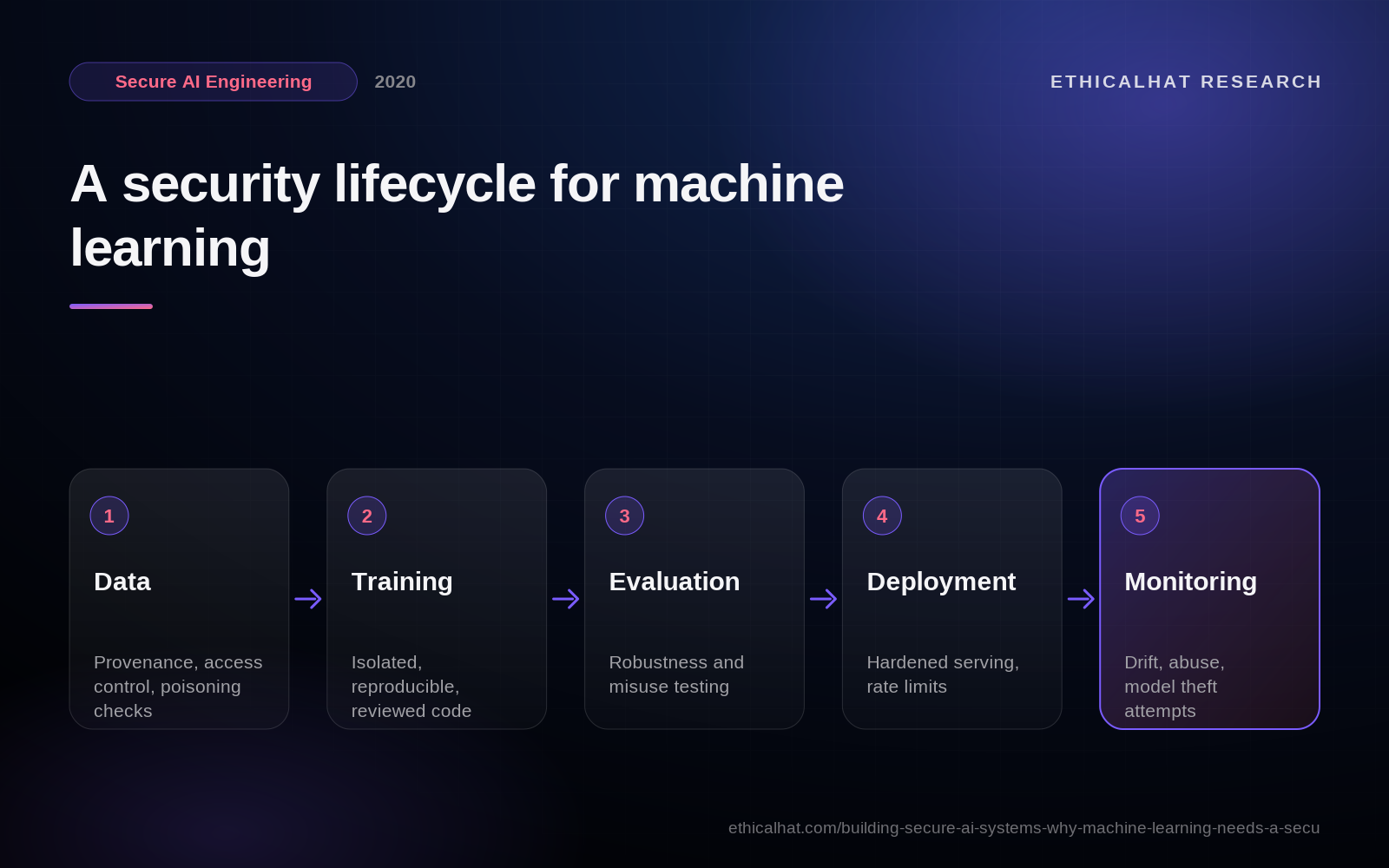
Machine learning is moving from research into products, but most ML projects have no security process at all. ML systems have the vulnerabil…

Six years after Google open-sourced it, Kubernetes has become the default platform for running containers in production. We explain what pro…
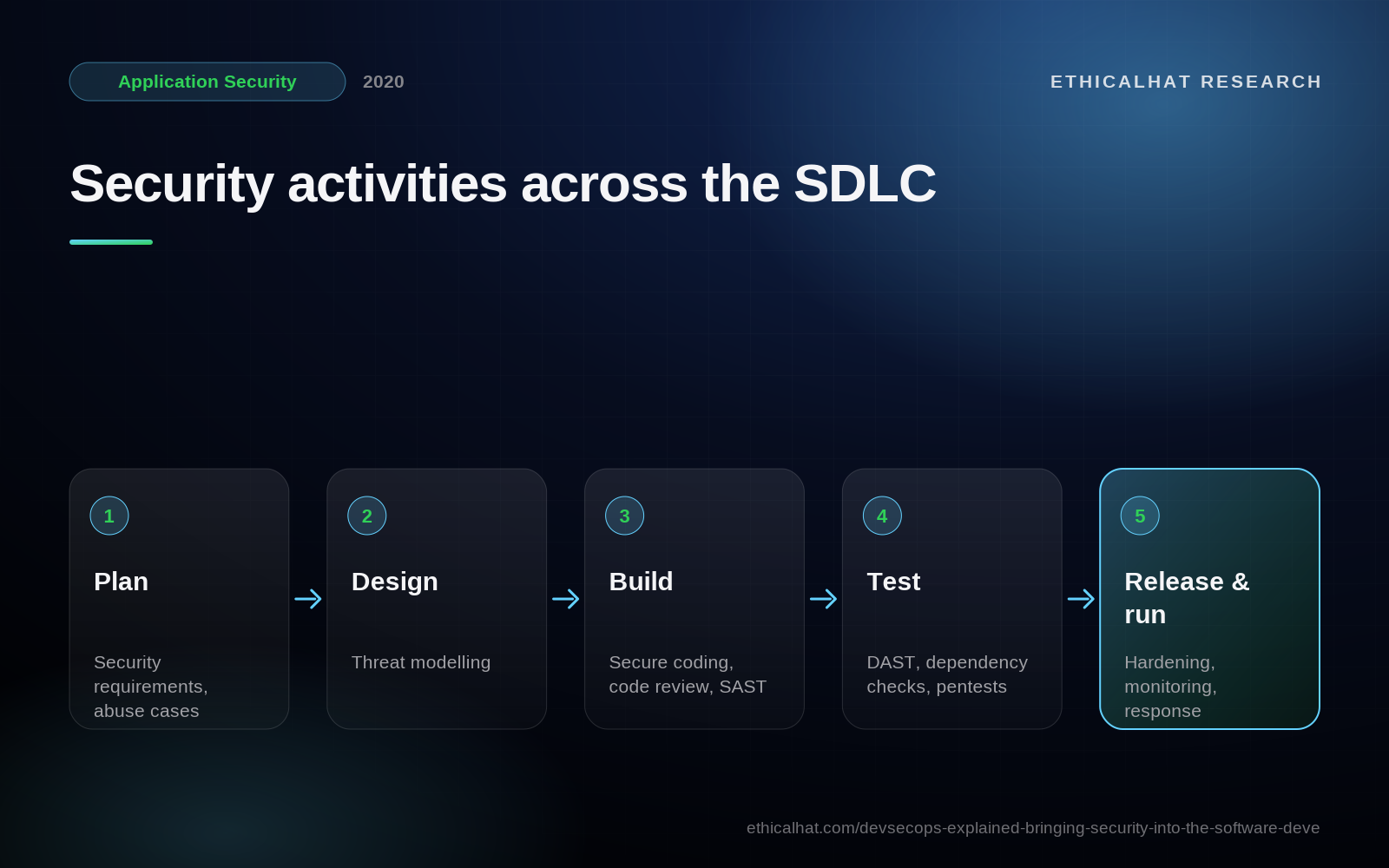
DevOps made software delivery continuous; DevSecOps makes security continuous too. Beyond the buzzword, it is a set of practices that put se…

Ransomware has moved from spray-and-pray malware to hands-on-keyboard intrusions that steal data before encrypting it. Here is how the attac…

Machine learning has transformed image recognition and translation. Can it do the same for programming? Research models like CodeBERT and pr…

Microservices became the default answer to 'how should we build this?' without most teams asking whether they had the problems microservices…

Almost every security product now claims to use AI. Behind the marketing, machine learning has genuinely changed how threats are detected, f…